

At dawn on April 27, 2026, in the rural community of El Mirador in Nayarit, 120 Mexican Navy Special Forces troops moved on a cabin surrounded by roughly 30 SUVs and more than 60 armed men. They were looking for CJNG commander, Audias Flores Silva, alias “El Jardinero.”
Four close-support helicopters, two transport helicopters, four fixed-wing aircraft, and some 400 additional naval personnel sealed the perimeter.
The security ring scattered on contact, a deliberate distraction manoeuvre designed to buy the principal time to vanish. It had worked before.
This time, aerial and ground tracking followed their target to a sewage drainage conduit near the cabin. Marines pulled him out without firing a shot.
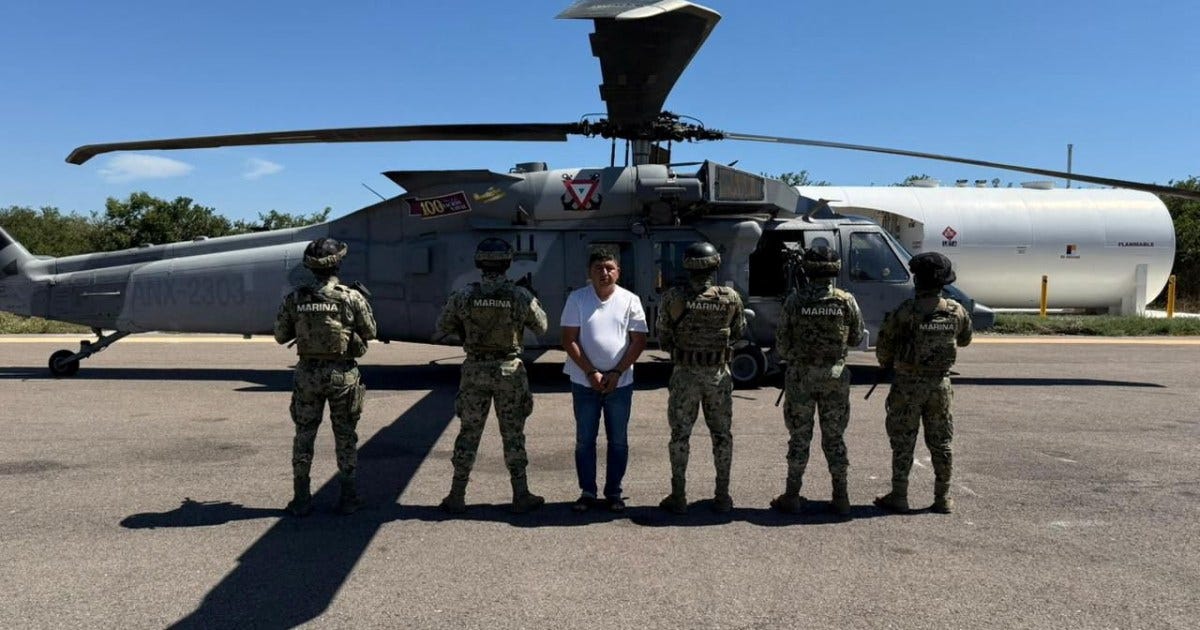
The man in the pipe was Flores Silva, the man that the US Treasury, the DEA, and the State Department had labelled the most important operational commander in the CJNG. He was 45 years old and had been running for close to two years.
Flores Silva was an expert at building escape routes. A military intelligence profile credited him with personally designing the rings of protection that kept his former boss, El Mencho, a fugitive. But this expertise didn’t help hhim escape capture yesterday.
His capture is the second major coup suffered by the CJNG this year, following the killing of Nemesio Oseguera Cervantes, alias “El Mencho,” in February. Flores Silva had been ranked by Mexican intelligence as one of four men capable of inheriting the cartel.
World of Crime’s book, CJNG - A Quick Guide to Mexico’s Deadliest Cartel is on sale here.
Hours later, in a separate operation in Zapopan, Jalisco, Army Special Forces and the National Guard arrested César Alejandro “N,” alias “El Güero Conta,” Flores Silva’s principal financial operator, a man who had moved cartel proceeds through shell companies, prestanombres, aircraft, vessels, ranches, and tequila producers.
The simultaneous loss of an operational chief and his financier on a single day is a heavy blow for the CJNG. Within hours, armed men set fire to businesses in Tecuala, Ahuacatlán, and Santa María del Oro in Nayarit.
Flores Silva was flown to Mexico City, and Mexican have confirmed an active US extradition request.
But to understand who was actually captured in that drainage pipe, we need to go back more than two decades and 2,500 kilometres, to a federal courtroom in Charlotte, North Carolina.
From Michoacán to Charlotte to the CJNG
Flores Silva was born on November 19, 1980, in Huetamo, Michoacán, in the eastern Tierra Caliente on the Guerrero border. The date and place are confirmed across OFAC, State Department, and DEA records. He maintained a parallel false identity under the name Gabriel Raigosa Plascencia, and his documented aliases read like a catalogue of the roles he filled: “El Jardinero,” “El Comandante,” “El Bravo 2,” “Audi,” and “Mata Jefes” — the Boss-Killer.
Huetamo in the 1980s and 1990s was shaped by the Valencia family, the avocado-growing clan rooted in Aguililla. Traditional marijuana and poppy cultivation was giving way to something larger, and the region was deep into the cycle of armed competition, weak-state terrain, and recruitment of teenage males into trafficking networks that would define Michoacán’s criminal ecology for the next three decades. Investigative reporting places Flores Silva’s entry into crime in the mid-1990s as a teenager, though his precise path into organised crime and his first patrón remain undocumented.
One common misconception requires correction. Flores Silva and El Mencho are often described as though they rose together from the same soil. They did not. Mencho was born in Naranjo de Chila, Aguililla, in southwestern Michoacán. Flores Silva was from Huetamo, in the east. They were 14 years apart in age. There is noe evidence, at least made public, that they were childhood friends or relatives.
The first hard institutional trace of his criminal life came in the US. In 2002, at the age of 21, Flores Silva was indicted in the US District Court for the Western District of North Carolina on federal narcotics trafficking charges. He was convicted and served a five-year federal prison sentence before being released and deported to Mexico, likely around 2007 or 2008. The Charlotte venue is confirmed in near-identical language by ICE, Treasury, State, and DEA.
Charlotte was a plausible destination. The metropolitan area had become a major “new destination” for Mexican migration in the 1990s and early 2000s, creating exactly the kind of labour, kinship, transport, and remittance corridors that trafficking networks had historically exploited. The Western District of North Carolina prosecuted repeated cocaine-trafficking conspiracies routing drugs from Mexico through Texas and Atlanta into the Carolinas during this period.
What the Charlotte chapter proves, even in outline, is that Flores Silva was embedded in a US narcotics distribution network years before CJNG itself existed. He entered American federal custody as a 21-year-old from Tierra Caliente. He left it, five years later, with an understanding of American law enforcement tactics and distribution logistics.
After his deportation, Flores Silva entered a seven-year documentary silence. No public source places him with a specific cell, boss, or operation between roughly 2008 and 2015.
But around that time, the Valencia family and their Milenio Cartel was disintegrating. They were battered by a war against the Zetas and fled Michoacán, successive Valencia leaders were captured in 2003, and their Sinaloa Cartel patrom, Nacho Coronel, was killed in 2010.
Out of these collapses, CJNG was founded in 2011 by Mencho. Flores Silva is not listed among the founding members by any institutional history of the organisation. Whatever role he later occupied, he was not there at the creation.
He emerged from that silence on April 6, 2015, with one of the deadliest attacks on Mexican police in modern history.
On the Mascota–Las Palmas highway near the village of Soyatlán in San Sebastián del Oeste, Jalisco, a CJNG group of over 80 gunmen ambushed a convoy of 20 Fuerza Única Jalisco officers returning from Puerto Vallarta to Guadalajara. Gunmen set a flatbed truck on fire to block the road in a zone without phone signal, then opened fire from elevated hillside positions with high-calibre rifles and fragmentation grenades. Fifteen officers were killed and five more wounded.
Investigations by the Fiscalía de Jalisco identified Flores Silva as the man who planned the attack.
The motive was allegedly revenge. On March 23, Fuerza Única had killed CJNG plaza chief Heriberto Acevedo Cárdenas, alias “El Gringo,” at Zacoalco de Torres. The ambush was part of a 20-day CJNG offensive that killed 21 officers and triggered a backlash from the government, during which the CJNG would shoot down a military helicopter.
Before Soyatlán, Flores Silva was essentially invisible in the public record. After it, he was a name.
Mexican Federal Police first captured him on July 26, 2016, near a hotel in Bucerías, Bahía de Banderas, Nayarit, carrying false identification as Gabriel Raigosa Plascencia and facing six outstanding warrants. He was publicly identified as CJNG’s plaza chief in Nayarit: production, transport, sale of drugs, plus huachicol. The state charges included aggravated homicide, attempted aggravated homicide, and organised-crime participation, all linked to Soyatlán. He was held at CEFERESO No. 2 “Puente Grande” for approximately three years.
Then, in 2019, a Jalisco state court of first instance absolved him, and he walked out of Puente Grande free. Mexican reporting universally links the release to rumours of a multi-million-peso bribe. h
On May 11, 2024, Jalisco’s Supreme Court revoked the absolution and sentenced him, in absentia, to 45 years of prison.
The Architect of the Pacific Corridor
There has been widespread reporting that Flores Silva was El Mencho’s “right-hand man” but this misses the nature of the relationship.
A federal witness statement, cited by Infobae in March 2026, states bluntly that Jardinero and Mencho were not close friends, and identifies another lieutenant, Hugo Gonzalo Mendoza Gaytán, alias “El Sapo,” as the founder’s actually closer confidant. But Flores Silva was evidently a skilled lieutenant who was intimately trusted with crucial operations.
A military intelligence profile reviewed by Milenio described the specifics: he supervised the construction of a clandestine private hospital where the kidney-diseased Mencho could receive discreet medical care, he purchased heavy weaponry from suppliers in the United States and Europe, and he designed escape routes through the natural geography of the Jalisco highlands.
The US Treasury’s 2025 OFAC designation added the harder institutional framing: he was a regional commander controlling clandestine methamphetamine and fentanyl laboratories across central Jalisco and southern Zacatecas, supervising clandestine airstrips and light aircraft, coordinating tractor-trailers moving cocaine from Central America, and managing passenger vehicles feeding US distribution cells in California, Texas, Illinois, Georgia, Washington, and Virginia. His portfolio stretched across at least six Mexican states: Jalisco, Nayarit, Zacatecas, Michoacán, Guerrero, and Colima, including the corridor to the port of Manzanillo.
Puerto Vallarta became, under his tenure, simultaneously a tourism-based money-laundering node and a strategic headquarters. His consolidation in Nayarit was inseparable from the corrupt political-security order that shaped that state in the 2010s.
But what made Jardinero more than just a conventional, if important, plaza boss was the sophistication of his financial architecture. The Treasury’s February 2026 OFAC action exposed the Kovay Gardens / Vallarta Gardens timeshare fraud network: a 17-company scheme operating out of Bahía de Banderas that had defrauded American and Canadian retirees of millions of dollars over 14 years. Named lieutenants collected payments from cartel-linked boiler rooms on his behalf.
A separate Treasury action in 2023 identified Mary Cruz Rodríguez Aguirre as his money-laundering broker, moving more than $6 million in US drug proceeds to Mexico through currency exchange houses and US-based businesses between 2020 and 2022. His empire fused drug manufacture, transport, extortionary governance, and white-collar fraud aimed at foreign victims.
The arrest of El Güero Conta exposed the other side of that ledger: shell companies, prestanombres, aircraft, ranches, and tequila producers, alongside accusations from residents of Los Naranjos, Tequila, that he had displaced 40 families since January 2024 to secure a strategic CJNG corridor.
Envoy to the Chapitos
After Joaquín Guzmán López’s July 2024 betrayal of “El Mayo” Zambada and the subsequent Sinaloa civil war, Flores Silva reportedly personally brokered an alliance between CJNG and Los Chapitos. The opening contact came through a CJNG emissary at a ranch in Huajicori, Nayarit, treated as neutral territory, according to Milenio. A subsequent meeting in Guadalajara paired Flores Silva with Abdiel Guzmán Araujo, son of “El Guano.”
The deal: Los Chapitos shared trafficking routes for drugs, weapons, and migrants; CJNG provided protection in Sinaloa, Zacatecas, San Luis Potosí, Nayarit, and Chiapas; and Flores Silva personally kept close ties with Chapitos leader, Iván Archivaldo Guzmán Salazar.
This would represent a level of cross-cartel trust previously unimaginable in the Mexican drug trade. His capture now puts that alliance, and CJNG’s strategic depth against the Mayiza, in immediate doubt. Without the guarantor, the friction points between mid-level commanders of both organisations are likely to surface.
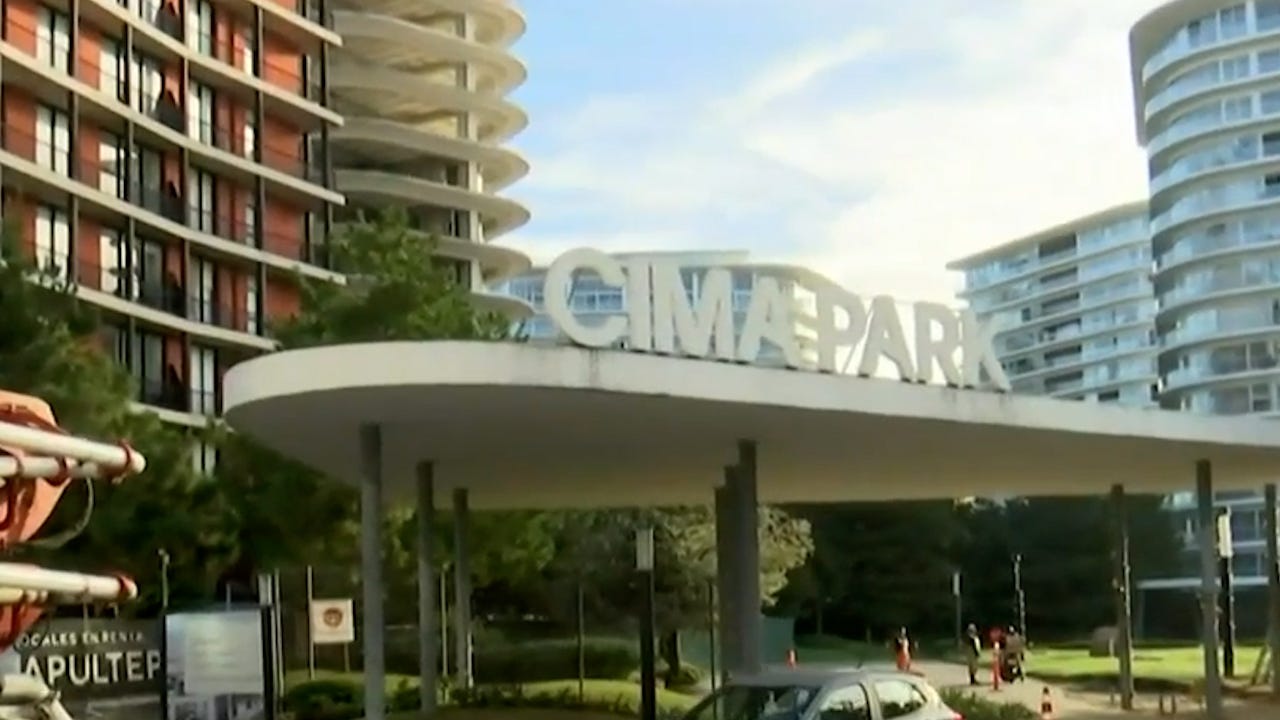
In November 2023, Flores Silva demonstrated why he had been so difficult to capture. Marine commandos descended on the Cima Park luxury complex in Zapopan’s Valle Real and secured two luxury apartments. They found a firearm, undisclosed cash, paintings and sculptures dedicated to CJNG leaders, and a rescued kidnap victim. Flores Silva had been operating under cover as a businessman and art collector, but mamaged to escape jus tin time.
During those years, the narcocorrido industry had already crowned him. Gerardo Díaz y su Gerarquía released “El Sucesor” in June 2022, naming the geography, the bounty, the succession claim: “para todos el jardinero.” Los Farmerz released “El Jardinero” in January 2025, which soon rocketed to over 1 million views.
On the day of the capture, Milenio observed acidly that the corridos had got it wrong: they crowned him before he could be crowned.
What Happens Next?
He will most likely be extradited to the US, as many top narcos have been under President Claudia Sheinbaum.
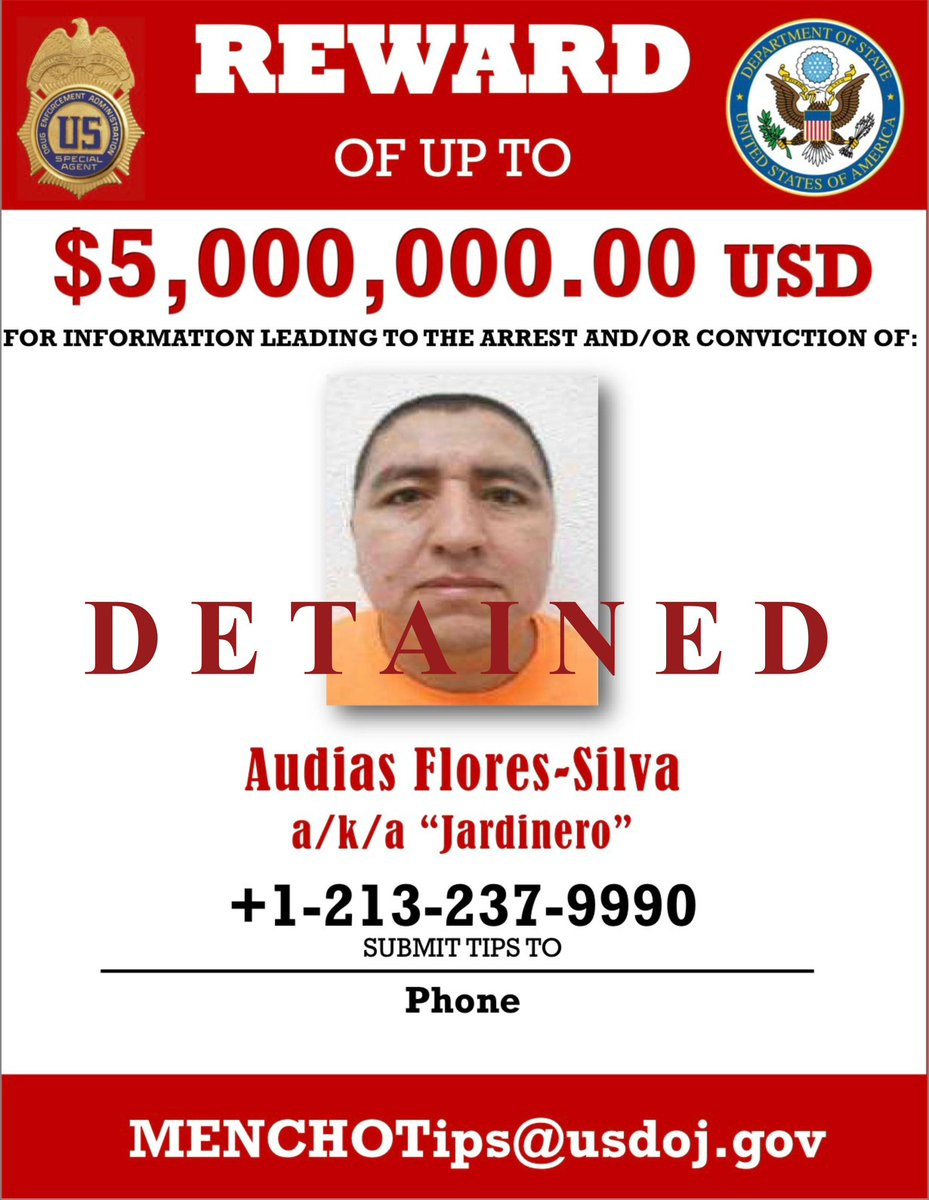
He faces an indictment in the US District Court for the District of Columbia for conspiracy to distribute cocaine and heroin. But the case is handled by the Department of Justice’s Criminal Division rather than the local US Attorney’s Office. Treasury designated him under the Foreign Narcotics Kingpin Act in April 2021. The State Department posted a $5 million reward. In June 2025, he was designated a Specially Designated Global Terrorist.
The intelligence value of Flores Silva in US custody is potentially enormous. As the former security chief, the architect of the Chapitos alliance, the manager of Pacific corridor logistics, and the controlling figure behind the Kovay Gardens fraud network, he is a living repository of CJNG’s financial architecture, its corrupt government contacts, its laboratory and airstrip locations, and the operational terms of the most significant cross-cartel alliance in recent Mexican history.
Flores Silva’s capture caps a 70-day stretch in which the CJNG has lost its founder, its number-two operator, and one of its principal financiers. The cartel’s unparalleled ability to remain united will now be tested more than ever.
Juan Carlos Valencia González, alias “El 03,” El Mencho’s stepson, is reported to be the new top leader, though analysts caution he lacks influence among older, battle-hardened regional commanders who viewed Flores Silva as their peer.
The most consequential reframing the evidence supports is this: Flores Silva’s power came from his skill. Reading across his entire career, his multi-faceted skill as a criminal operative shines fort. He could plan ambushes, run significant drug trafficking pipelines, protect his boss, organize a timeshare fraud ring, ensure weapons procurement, and broker a peace deal with Sinaloa.
The corridos treated him as a successor to Mencho, but he seemed to be the CJNG’s . chief operating officer.