

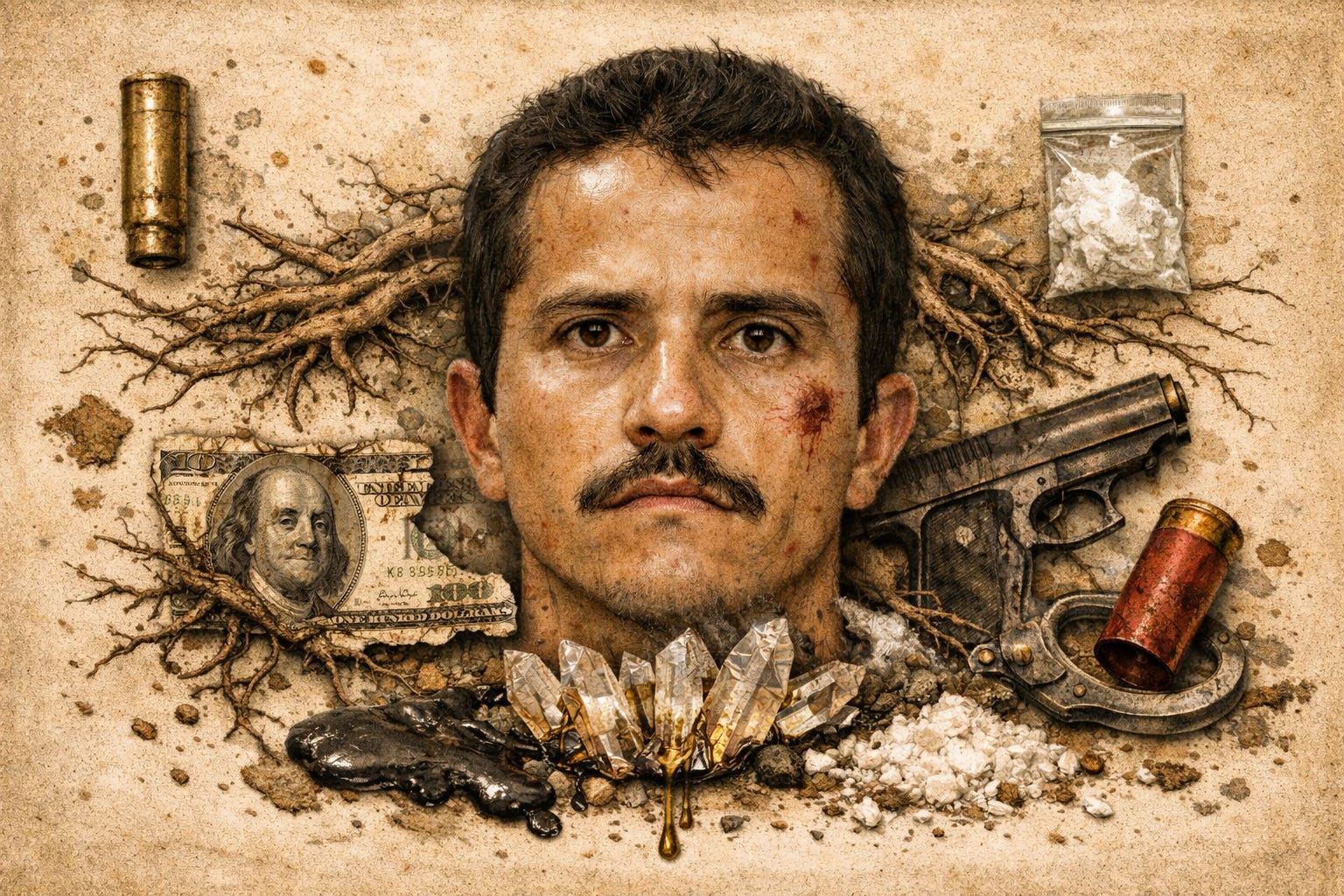
1 - The Son of the Sierra
The boy sat at the edge of the field and watched the road.
He had been born into a Mexico that had promised to fix places like this. The Tepalcatepec Commission had poured money and engineers into the lowland valleys, building dams and irrigation channels, dragging the Tierra Caliente into the modern era. None of it reached Culotitlán. Perched in the folds of the Sierra Madre del Sur, the village where Rubén Oseguera Cervantes came into the world in 1966 was accessible only by a dirt track that turned to mud four months of the year.
There was no electricity. No running water. The houses were adobe — earth packed with grass and agave fibre — and the only buildings made of anything else were the church and the municipal office down in Aguililla.
This article was written by Chris Dalby and first published in Spanish by Perpetuo Magazine on March 24, 2026. It has published by World of Crime, in its English form, with their kind permission.
He grew up in that adobe house with five brothers, Juan, Miguel, Antonio, Marín and Abraham. The older brothers worked. The younger ones watched the older ones and understood what was expected. Their father worked the Valencia orchards, which meant the family’s survival was tied, as it was for most of Aguililla, to one clan’s goodwill.
Into the absence left by the Mexican state, the Valencia family had grown like the avocado trees themselves: deep,rooted, pervasive, entirely in charge of what the soil produced. In the 1960s the patriarch was José Valencia, already a reliable supplier of marijuana and opium poppy to larger trafficking groups further north in Sinaloa.
By the time Rubén was entering adolescence, a younger generation was consolidating that power. Armando Valencia Cornelio, who would become known by the alias “Maradona”, was formalising the family’s operation into something more structured, more ambitious, and considerably more dangerous.
The Valencias were not criminals in the way that word implies disorder. They were order. They employed half the municipality in their orchards and packing plants. When a farmer needed seed money and the bank said no, the Valencias often said yes. When a dispute needed settling, the Valencias settled it.
The state visited Aguililla the way weather visits a drought: sporadically, without warning, and without staying. The Valencias never left.
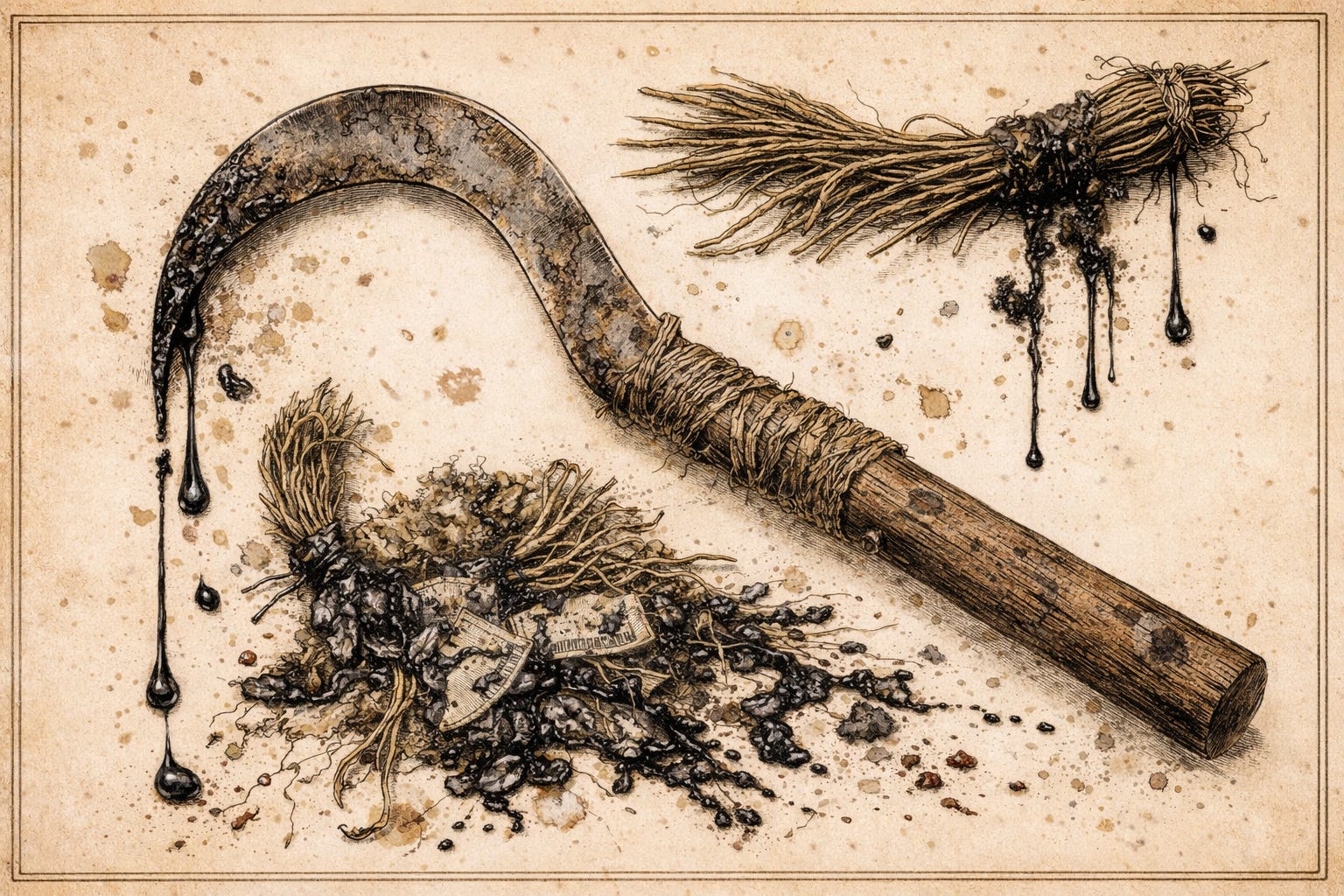
Nemesio left school in the fifth grade and went to work in the orchards. There was nothing unusual about this. The harvest was grinding work. The picker’s tool was a gancho, a long bamboo pole with a metal hook and a small cloth basket at the tip. The avocado trees bled a milky sap when the fruit was pulled away and the sap turned black in the air, a viscous resin that stained everything it touched. The children of Aguililla walked home each evening with blackened hands and blackened clothes, the mark of the field class ground into their skin.
What schooled him instead was the palenque. The cockfighting pit was where the real curriculum of Aguililla played out on Saturday afternoons: who had money and who did not, who commanded silence when they walked in and who made way for them. The Valencias held court there. A boy who paid attention could learn the entire social architecture of the narcopueblo from a single afternoon in the palenque’s dust and noise. Nemesio paid attention.
By 1980, the Valencias needed something more than pickers. The Mexican Army had begun running search and destroy missions through the Sierra, looking for the marijuana plantations that had been growing quietly alongside the avocado groves.
The solution was simple and ancient: put the sons of trusted workers in the hills above the crops and have them watch the roads.
The elevation, when it came to Ruben, was not offered as a choice. It was a promotion: from the laboring class to something with a different kind of status and a different kind of danger. He was given a weapon and shown where to sit. The marijuana grew in clearings below, hidden under the avocado canopy.
On the road beneath all of it, nothing moved.
He watched anyway.
