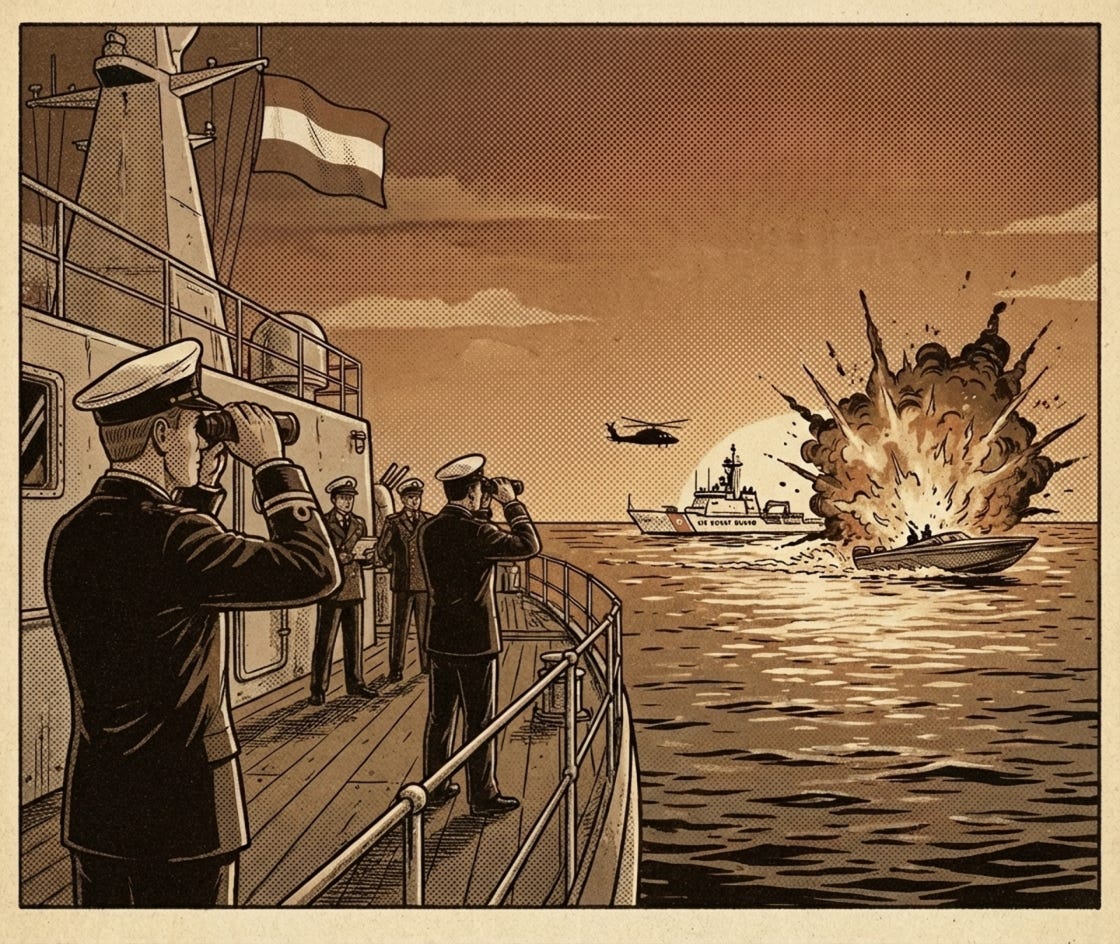
The Dutch Ministry of Defence has announced the suspension of all joint counter-narcotics operations with the United States Coast Guard in the Caribbean.
The decision risks the end of a highly successful partnership that enabled over 120 tonnes of cocaine seizures and over 140 trafficker prosecutions in US courts over more than two decades. The work of the Dutch Coast Guard in patrolling not only their own Caribbean islands, but acting as an intelligence lynchpin for broader efforts, has been a pillar of support for drug enforcement in the region.
Speaking in Aruba on January 5, Defense Minister Ruben Brekelmans said that Dutch assets would continue to intercept drugs in their own territorial waters, but would no longer participate in high-seas interdictions with the US.
But for the Netherlands, President Donald Trump’s authorisation of lethal force against suspected drug traffickers at sea crossed a legal and political red line. Dutch officials say the decision to permit the destruction of vessels with crews aboard, without arrest or judicial process, violates European human-rights obligations. The violent capture of Nicolás Maduro by US forces hardened that position.