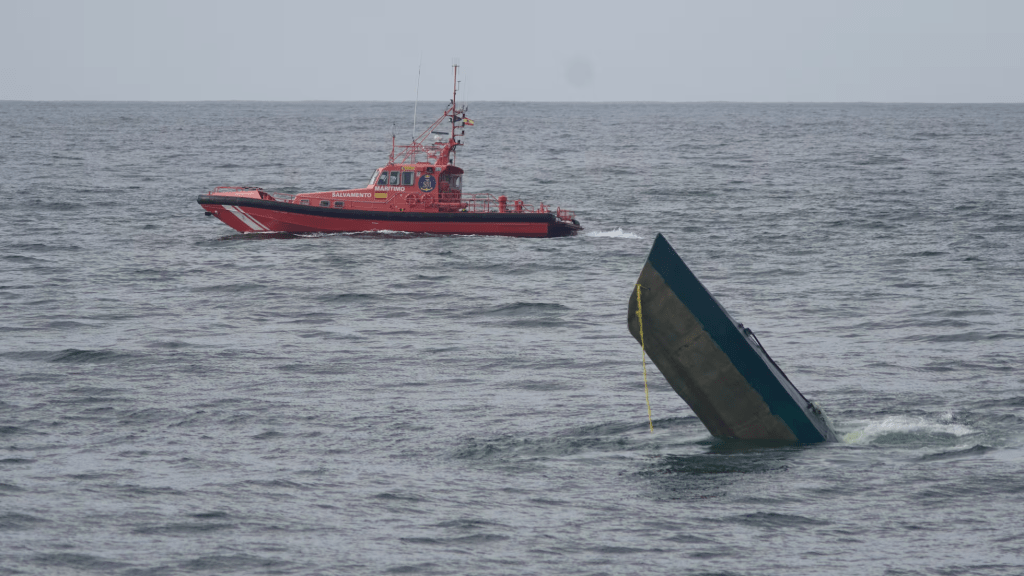
For over two decades, the business model of a narco-submarine has been brutally elegant. Build a clandestine low-profile vessel for at most a couple of million dollars, load it with several tonnes of cocaine, cross the ocean, unload, sink the evidence.
The hulls were expendable amid sky-high profit margins.
But all that might be changing, according to Spanish police.
“These semi-submersibles used to head to the area around the Canaries on one-way voyages and they’d then be sunk,” said Alberto Morales, the head of the central narcotics brigade of the Spanish Policía Nacional, in an interview with The Guardian this week that deserves to be quoted at length.
“What’s happened lately is that the price of the merchandise is really, really low, so the organisations have, logically, had a rethink. Rather than sink them, what they do now is unload the merchandise and set up a refuelling platform at sea so that the semi-submersibles can head back to the countries they came from and make as many journeys as possible,” Morales continued.
But has that theory really been put to the test? While Spanish police report an increase in the use of narco-subs and a drop in other cocaine trafficking methods, such as sailboats, no narco-sub known to have been re-used has been seized.
In this feature, World of Crime looks at the economics, the technology, and the clues to be gathered from past seizures to see if drug traffickers are really recycling their submarines.