

On the morning of 17 June 2026, residents of the Nuevo Santa María neighbourhood in Lagos de Moreno, Jalisco, found two young men taped to a lamppost.
Both were reported to be eighteen. They had been wound to the pole from the ankles up in brown packing tape, their mouths sealed, mouse whiskers drawn on their cheeks and the word RATA written across each forehead in marker. A red and black Italika motorcycle stood beside them. A placard accused them of stealing it.
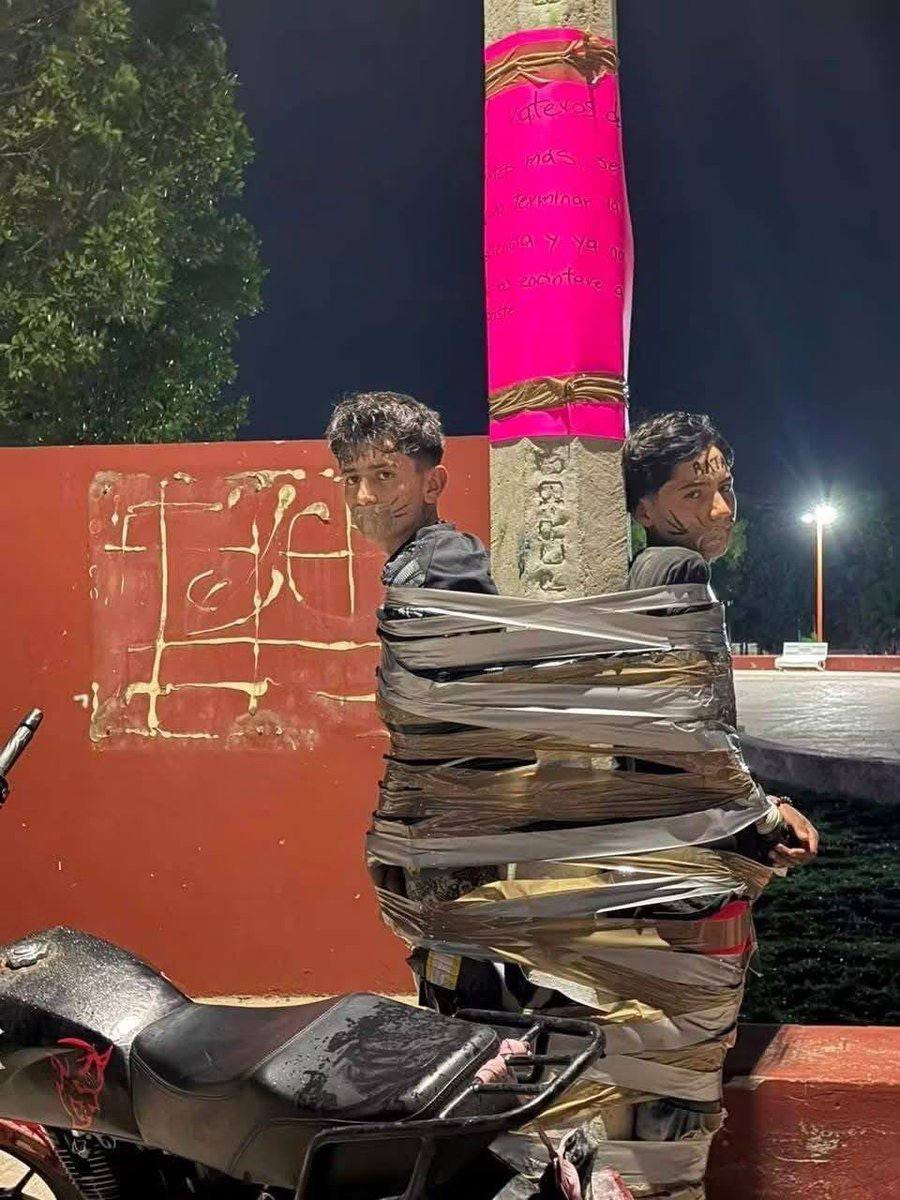
They were not the only ones to be found this way. Between 13 and 19 June, five men appeared at dawn across the town in the same condition, bound to poles, several of them beaten, each named on a sheet of cardboard as a motorcycle thief.
Four bikes reported as stolen were recovered and handed to authorities. No one filmed any of the captures or the men being tied up. But on social media, the supposed vigilante got a name: the Batman de Lagos de Moreno.
What do we know about Batman de Lagos de Moreno?
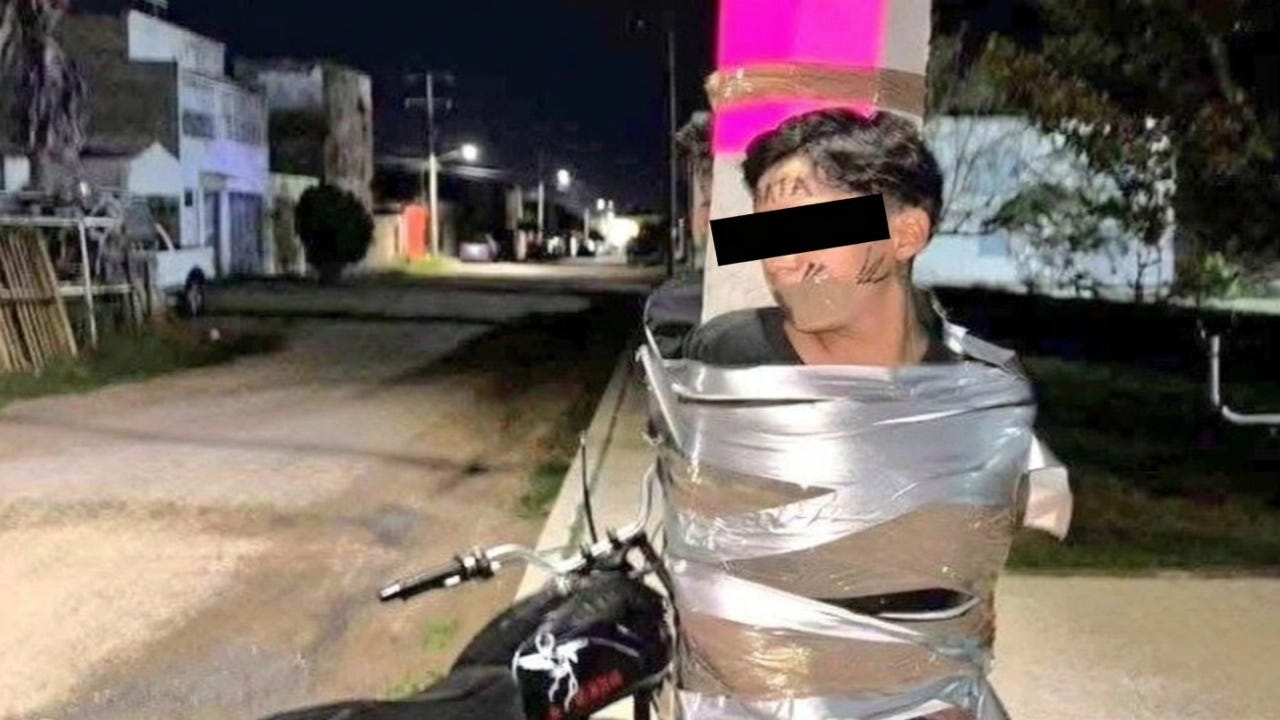
The men pulled from the poles had all been beaten. Municipal officers found them beaten and bound and handed each to the Ministerio Público and investigative police, who moved them to hospital for treatment.
While their names and any gang or cartel affiliations have not been revealed, they were all between 18 and 23 and only alleged to have committed street-level motorcycle theft.
No crime has even been confirmed. The accusation was made entirely by the staging. Each scene was a statement: the word ratero or RATA inked on a forehead, cartoon whiskers drawn on the face, a placard spelling out the charge and, in three cases, the supposedly stolen bike propped alongside as exhibit. The placards were more of a warning to others. "Esto les va a pasar a todos los rateros," (This will happen to all thieves), read one.
There has also been no claim about who committed this. Often, cartels leaving threatening banners, known as narcomantas, will sign their names and identify those they are targeting.
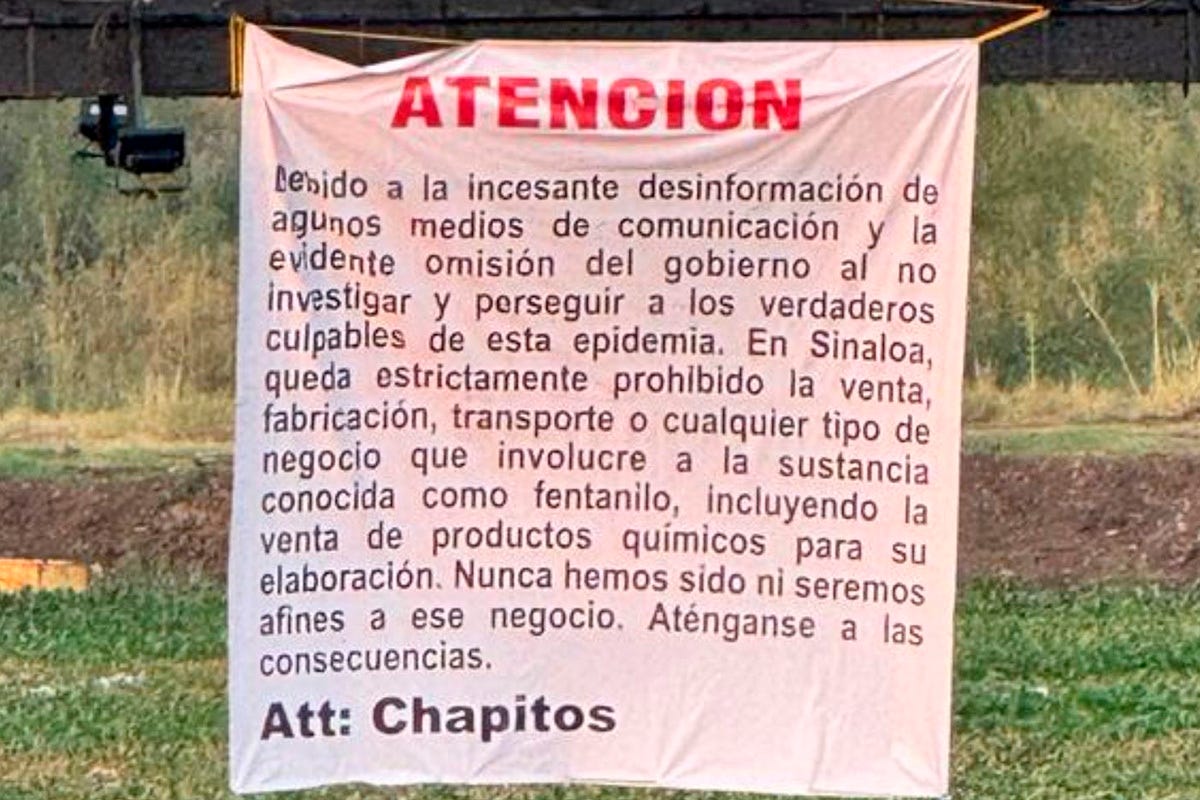
The Batman de Lagos de Moreno is a viral trend, but it’s only based on social media furore, not on any statement by the alleged vigilante.
What does the Mexican public think?
This happened in Jalisco, the home of the Jalisco Cartel New Generation (CJNG), Mexico’s deadliest cartel.
The story wrote itself. To some, he was a citizen tired by useless authorities who had gone hunting thieves on his own. To others, he was a silent guardian. To many just enjoying the meme, he was best represented by a costume Adam West might have been shamed by.
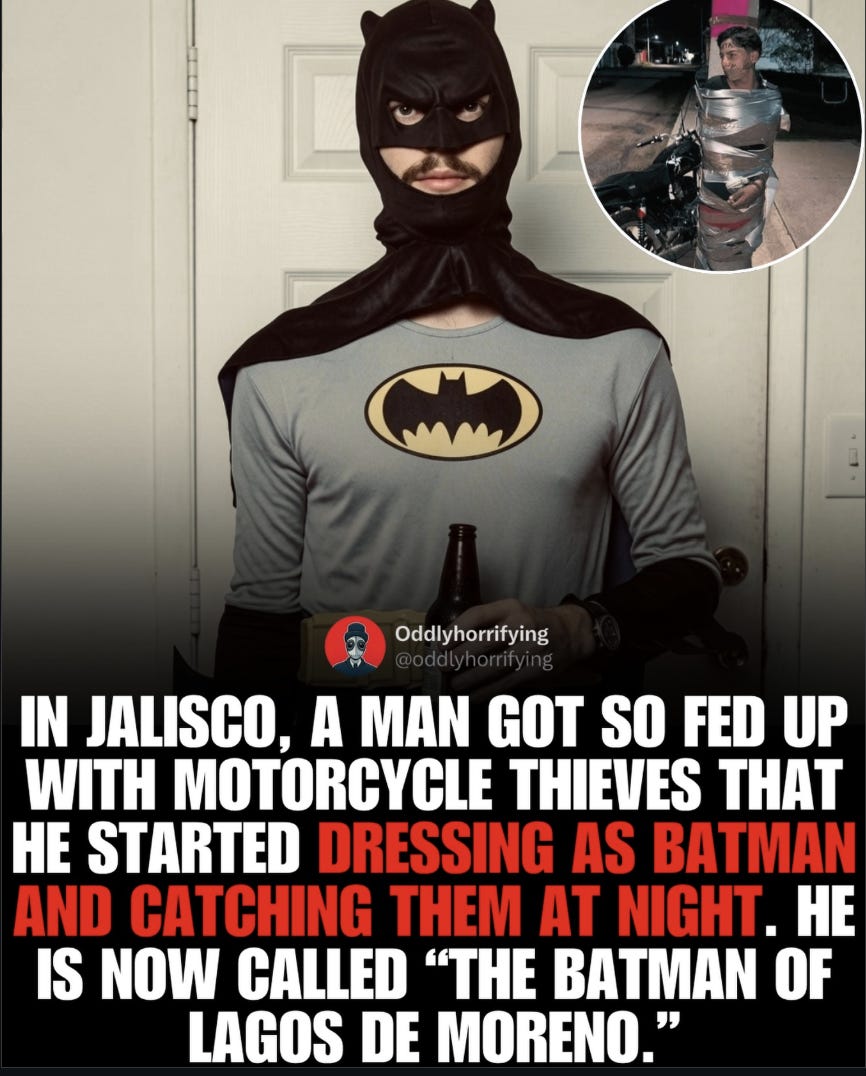
Within a week, he even had that ultimate proof of modern success: Batman de Lagos de Moreno had his own memecoin.
What do the authorities think?
Investigators do not see a hero. Prosecutors have opened separate investigations into each of the five cases. Whether the men were thieves does not change the fact they are being treated as victims of kidnapping and bodily harm.
For Jalisco’s chief prosecutor, Salvador González de los Santos, “at this moment, they are the victims.” Mexico frowns, if ineffectually, at anyone taking justice into their own hands.
The single most concrete line of inquiry points away from a lone figure in a cape. Local sources told Milenio that investigators were examining a group of men who arrive in pickup trucks to seize their targets, and the state had identified two vehicles tied to the incidents.
Patrols were being stepped up across Lagos de Moreno to head off further cases, and residents were urged to report crime through legal channels rather than the nearest lamppost.
Is motorcycle theft really that much of a problem in Mexico?
Motorcycle theft is now the single largest category of vehicle theft in Mexico. Of the 105,435 vehicles reported stolen in 2025, more than 40,000 were motorcycles, around 38 per cent of the total. This has tripled in the last decade.
There are close to 9 million motorcycles on Mexican roads, a number swollen by the delivery economy of Uber, Rappi and DiDi, and they are the easiest large purchase in the country to steal and the fastest to liquidate. About three quarters of thefts happen while the bike is parked and unattended, after which the machine is either resold whole on false papers or stripped for parts. The most-stolen marque, by some distance, is Italika, the same budget brand left propped next to the two victims in Lagos de Moreno.
Jalisco sits near the top of the table. In the first two months of 2026 it recorded the third-highest state total in the country, behind the State of Mexico and Guanajuato. Lagos de Moreno reported at least 54 thefts between January and May 2026, up from 34 in the same period in 2025, and police dismantled a motorcycle chop-shop in the municipality in February.
Who is behind it?
At the bottom of the chain are the street thieves, the motoratones, working the parked bikes that make up around three quarters of all thefts.
A popular, cheap machine can be sold whole within hours on falsified papers, or broken down for parts in one of the chop-shops the police keep stumbling on, including the one dismantled in Lagos de Moreno in February.
The five men taped to the poles, if they stole anything at all, likely belonged to this tier.
But a stolen motorcycle can be used in many ways. For a hitman, a stolen motorcycle is cheap and hard to trace, can be abandoned or stripped once the job is done, threads through traffic, and vanishes into the swarm of delivery riders that fills every Mexican city.
In May, in Zapopan, Jalisco, a gunman walked up to a man sitting in his car, fired repeatedly and fled on a motorcycle. When federal forces killed CJNG founder, El Mencho, February, men on motorcycles hurled petrol bombs at Oxxo stores and torched branches of the Banco del Bienestar across half a dozen towns.
Has Mexico had vigilantes like this before?
Mexico has never lacked people willing to take justice into their own hands.
Lynchings rose sharply through the last decade, but they never fit the pattern of the costumed crusader who works the same beat night after night.
That belongs to the likes of Seattle's Phoenix Jones, who patrolled in body armour for a couple of years before a pepper-spray arrest and, later, a drug charge ended the act. Mexico's own masked civic figures, like Superbarrio Gómez in the 1980s, sought to fight corruption through labor rallies and press conferences.
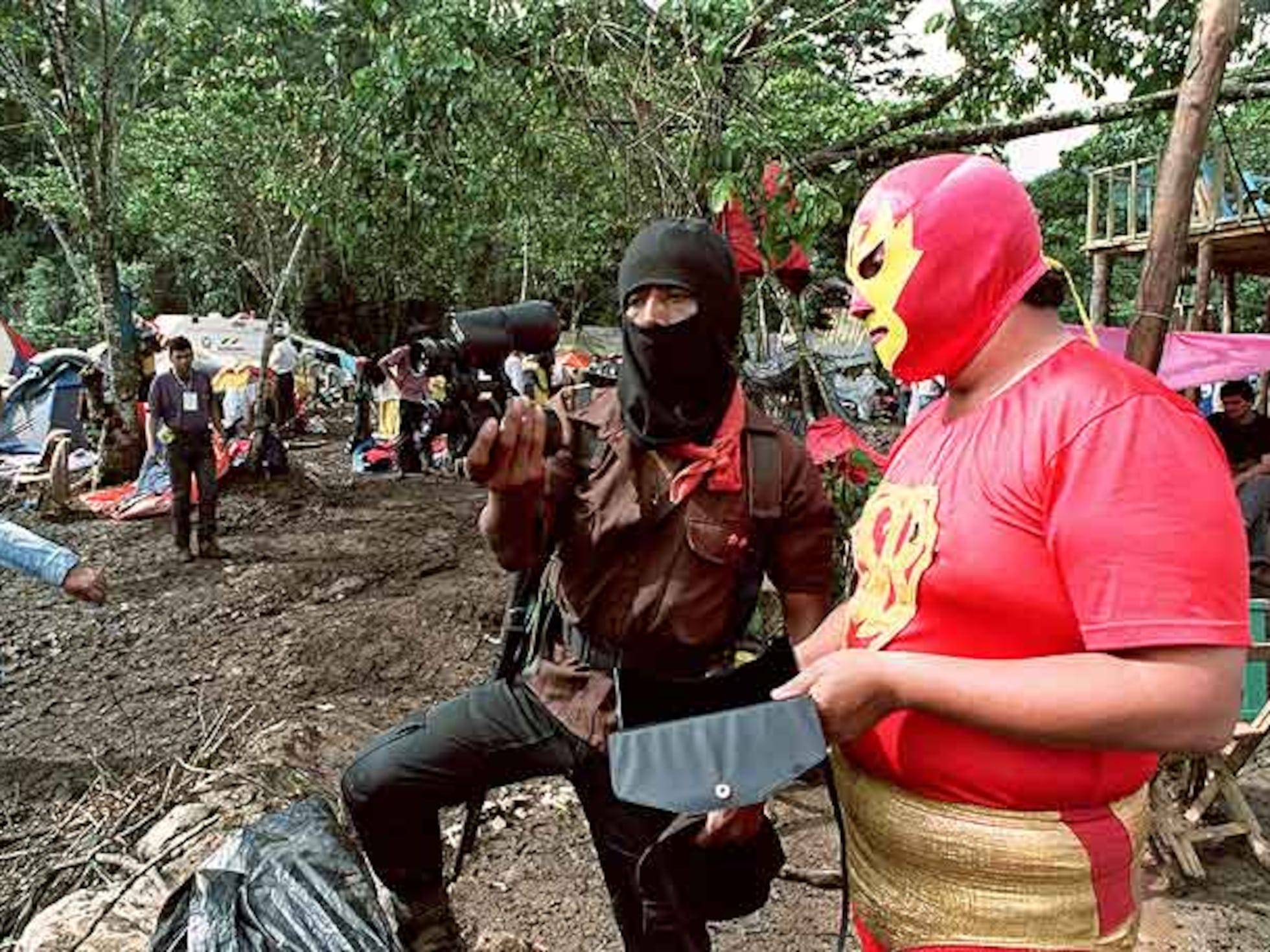
But there have been incidents like Lagos de Moreno before.
In May 2022, bodies began appearing in the boots of cars across Morelos, each left with a handwritten note signed by a self-named avenger who called himself el Limpiador de Morelos, the Cleaner. A man and a woman were found dead in a car boot in Cuautla on 5 May, another man in a vehicle on the La Pera highway on 10 May, and more in the days that followed.
The notes claimed the dead were child sex offenders. Social media anointed him a hero doing the work the police would not. And then the authorities said the quiet part. The Morelos state prosecutor, Uriel Carmona, announced that the Cleaner was probably not a lone justiciero at all, but an organised-crime operation wearing the avenger's mask.
Just like Lagos de Moreno.
And tying alleged thieves to poles and exhibiting them is not a citizen's improvisation. It is a recognised tactic of Mexican criminal governance.
In 2020 the Sinaloa Cartel strung alleged robbers from a communications antenna on top of a building, beating one of them with a board. There too, the word rata was written on their bodies.
Batman de Lagos de Moreno is sadly not some would-be Bruce Wayne returning Italika motorbikes to their owners. It’s most likely a local group pissed off that someone was stealing in their territory.