

Dressed in camouflage fatigues, a man walks up to the camera. “Es Colombia, es Ucrania, y es…” he gestures towards his shoulder where a patch bearing the Mexican flag is visible. The man claims to be a former Colombian soldier who, having fought in Ukraine, has now come to Mexico where he is allegedly serving among the ranks of the Jalisco New Generation Cartel New (CJNG) in Michoacán state.
While I can’t independently verify this individual’s claims, his story is not beyond the pale. Since the early 2010s, thousands of Colombians have gone abroad to serve in all manner of conflicts, both righteous and reproachable.
Colombians can be found today on the front lines of Ukraine’s grinding struggle against Russian aggression, defending businessmen in Latin American urban centers, and serving as instructors for the Libyan military. In fact, the same individual might end up doing all three of these things over the course of their mercenary career, moving between global hot spots in search of increasingly lucrative contracts.
This guest piece was contributed by Henry Suckow Ziemer, Associate Fellow at the Center for Strategic and International Studies. I warmly recommend you subscribe to his excellent Caballeros newsletter for his reports on the geopolitics of Latin America.
A watershed moment came in 2021 when Haitian President Jovenel Moïse was assassinated, kicking off the political and security crisis that continues to engulf that nation. 26 Colombians were arrested in connection to the killing, mainly ex-soldiers who had been brough into the country as private security contractors, drawing renewed attention to Colombia’s role in the global mercenary ecosystem.
In the years that followed several articles have shed light on the reasons for Colombian soldiers are in such high demand. A combination of U.S.-training, hands-on expertise, all at relatively low cost makes Colombian fighters desirable to a wide range of groups looking for hired guns. At home, a weak military pension system and extensive informal recruiting networks create powerful push factors for ex-soldiers to try out the mercenary lifestyle.
But these explanations offer only part of the puzzle. Colombia is no longer at war, and the pace of military operations has slowed down especially under President Gustavo Petro’s “total peace” agenda. This seems like it would put a damper on demand for Colombian fighters, but the geographic scope of these soldiers of fortune has seemingly never been greater.
This is because the country’s mercenaries are no longer selling just their experience at home, but instead boast resumes speaking to a history of service in all manner of battlefield conditions. Like the CJNG gunman, many Colombian mercenaries are now veterans of three or more wars.
Fighters with experience in Ukraine especially seem to be in demand by groups looking to tap into expertise forged in the crucible of the world’s deadliest conventional war. Indeed, it should come as no surprise that the CJNG, which has been particularly active in recruiting Colombian fighters, has also been the fastest cartel to innovate when it comes to the use of armed drones.
The Call to Arms
With more than a quarter of a million active-duty personnel, Colombia’s military is the second-largest in South America, surpassed only by Brazil. In 2021 the New York Times reported about 10,000 military personnel retire each year across all branches. Most enlisted soldiers retire after two decades, receiving a pension that amounts to around $400 a month as thanks for their service. That’s not nothing, but for a 38, 40, or 45 year-old retiree who may have never held a civilian job and might now have a family to support, the prospects aren’t heartening.
Going abroad to work for private military contractors or cartels can be appealing for ex-soldiers. According to recruiters, some of these gigs can pay upwards of $4,000 a month, a full order of magnitude greater than what they might be collecting from pension disbursements. The work is dangerous, sure, but no more so than patrolling the same regions they’ve spent the last 20 years operating in.
At least, that’s what the recruiters say.
Word-of-mouth recruiting networks are key to explaining why Colombian mercenaries have spread so far and wide. While the country is not the only place in the Americas home to large numbers of underpaid and underemployed ex-military personnel, would-be mercenaries in Colombia have access to well-established and trusted channels for securing foreign employment.
These networks have their origins in Plan Colombia itself, when the United States brought in several contractors to assist in a host of activities, from training special forces, spraying chemical defoliants over coca fields. Working with military and security contractors exposed thousands of Colombian soldiers and police to the concept of mercenary work.
Then in 2005, the now-notorious U.S. private military contractor Blackwater began recruiting ex-military and police forces to deploy as building security guards in Iraq and Afghanistan. As World of Crime has documented, this operation was set up under the nose of the U.S. government, and ultimately earned the PMC a $42 million fine. In 2009, Blackwater went legit with its efforts and stood up a formal recruiting arm in Colombia to funnel personnel to its operations in the Middle East.
Demand for Colombian mercenaries continued to grow when Blackwater founder Erik Prince launched a new venture known as Reflex Responses (R2) based in and backed by the United Arab Emirates (UAE). Dozens of Colombians were among the first recruits to arrive for this project, and would eventually form the core of the UAE’s own bloodstained venture into power projection by proxy in places like Yemen and Sudan.
It’s also worth noting as well that at the time these networks were coalescing, Colombia seemed to be a rare example of successful counterinsurgency operations. While the country has suffered setbacks since, through the mid-2000s until the 2016 peace agreement with the FARC, Colombian security forces were steadily gaining ground and beating back an insurgency which just a decade prior had seemed like it might be a genuine threat to the state’s existence. Compared to Iraqi or Afghan troops who also received extensive U.S. training during that same period, Colombian forces looked head and shoulders more competent, fighting and winning against their guerrilla foes thanks to their own skill at arms.
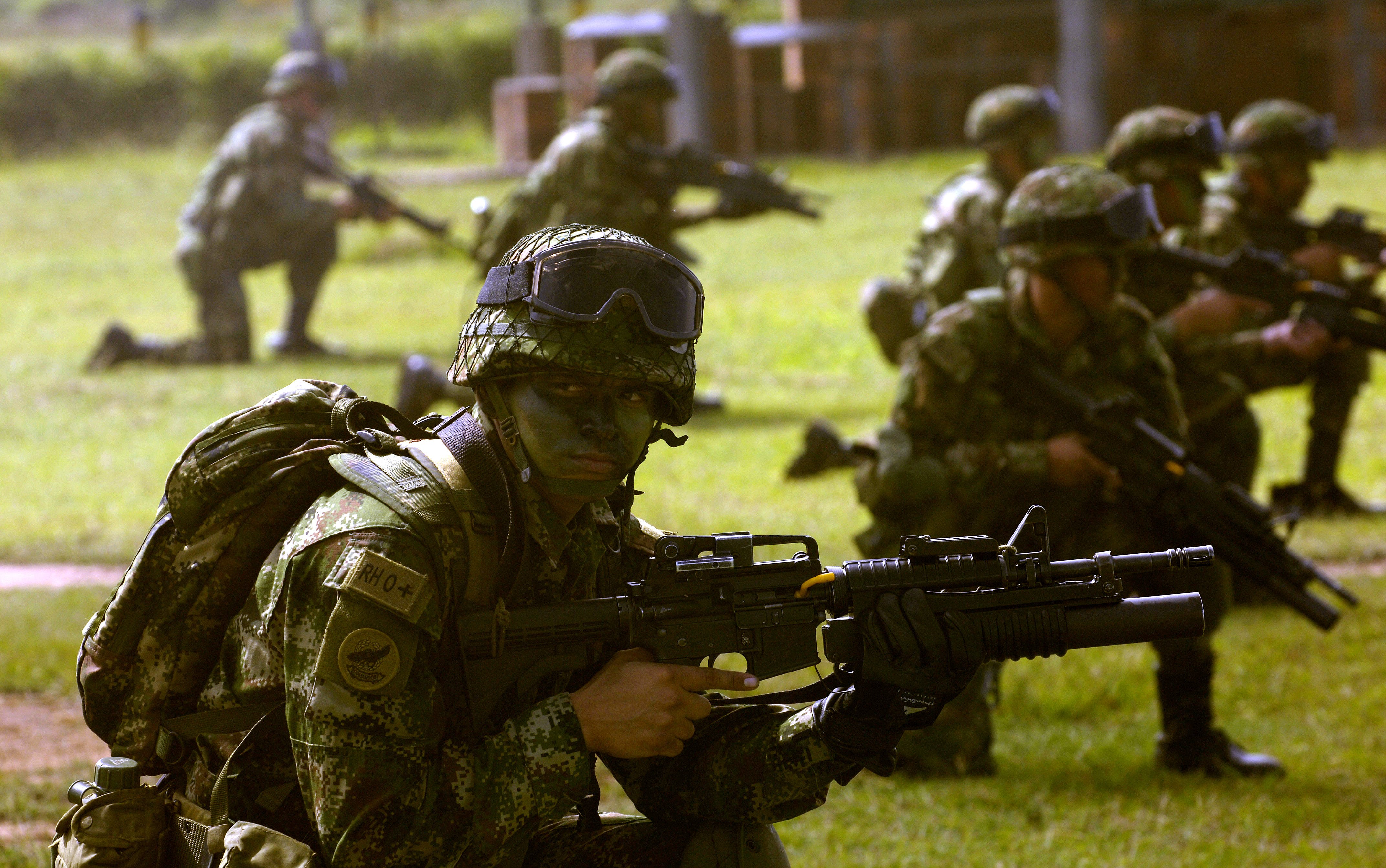
Starting in the early 2010s, path dependency starts to set in. While Blackwater also employed a number of ex-military personnel for other Latin American countries, especially Chile, the sheer number of Colombians who went abroad helped recruit their former squadmates and friends, who in turn recruited their own personal connections, growing both the absolute number, and proportional representation of Colombians in private armies and security details.
Personal ties could also help alleviate some of the issues associated with false or misleading recruitment campaigns. The war in Ukraine has generated no shortage of horror stories involving foreign nationals brought to the front lines without their knowledge or against their will. Many Cuban nationals fighting in the Russian armed forces were lured there with promises of civilian work, only to be coerced into signing enlistment contracts. Colombian veterans of multiple different conflict zones should, in theory, now be able to share knowledge with prospective recruits about which entities are trustworthy and which deployments are safer than others.
Of course, this system is far from perfect, and Colombian volunteers with Ukraine’s International Legion as well as soldiers contracting for the UAE have at various points reported being pressed into combat roles unexpectedly, receiving pay that is far below advertised levels, and enduring dehumanizing living and training conditions. Still, if the pipeline for Colombian mercenaries is even slightly better-vetted than that for other nationalities, it could have a big effect in terms of how many people are willing to sign up to fight abroad.
Darfur, Donbas, and Durango
It is difficult to fully describe the sheer range of activities and geographies where Colombian mercenaries are present today. Broadly speaking, the current loci of mercenary activity seem to be the Middle East and North Africa, and Ukraine. However, the nature of this work is transient, and evidence increasingly suggests a relatively free-flowing market for Colombian military entrepreneurs willing to hop from conflict to conflict plying their trade.
In the Middle East and North Africa, the UAE has continued to recruit heavily from ex-military and police ranks. According to one ex-Navy officer interviewed by the newspaper El País, since 2014 some 2,000 Colombians have been deployed to Yemen to assist with campaign against the Houthi rebels spearheaded by the UAE and Saudi Arabia.
More recently, in 2024 Colombian outlet La Silla Vacia, broke a story of a unit of at least 300 ex-soldiers fighting in Sudan on behalf of the UAE-backed Rapid Support Forces (RSF). Some of these fighters were reportedly hired as security guards in Dubai, only to be shipped off to Sudan via circuitous routes. At least 20 have died there because of kamikaze drone attacks, while other Colombian fighters have reported that a large part of their job involves training RSF fighters, including child soldiers.
Since 2022, the outbreak of full-scale war in Ukraine has proven a magnet for foreign fighters of all stripes, including Colombians. According to the latest reports, as many as 7,000 Colombians may be serving with the Ukrainian armed forces, making them one of the largest contingents of foreign fighters in the country. While it’s easy to ascribe cynical motivations to fighters who sign up to fight for the UAE, in the case of Ukraine I believe there is genuine heroism on display.
Ukraine must rank near dead last on your list of best places to be a soldier, especially if you are simply looking for an easy payday. Still, stories abound of Colombian fighters who traveled to Ukraine, in some cases with nothing but the clothes on their backs, to help it resist foreign aggression. A friend of mine who visited Kyiv last year has often remarked of the plethora of Colombian flags that decorated a memorial to fallen foreign soldiers.
Given the pusillanimous approach of most Latin American governments to the war in Ukraine, it is inspiring to see citizens from the region standing behind their principles and risking their lives.
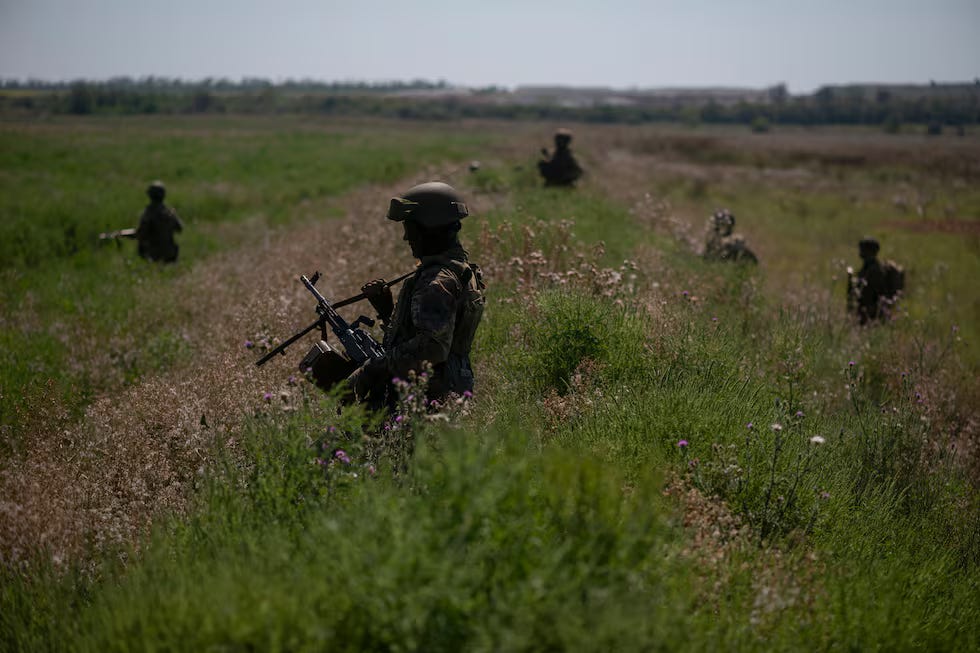
However, the influx of foreign fighters to Ukraine has clearly enabled some bad actors to sneak in as well. Last summer, Intelligence Online reported that a joint operation between Mexican and Ukrainian intelligence services had uncovered a scheme by cartels to send their members to Ukraine in order to receive training on drone warfare.
For Mexican cartels, Colombians veterans of Ukraine are the easiest way to gain access to a higher caliber of tactical knowledge, especially concerning the use of drones, mines, and fortifications. A shared language facilitates information transmission, and even the brutality of cartel warfare could be a welcome change of pace when compared to the grinding nature of frontline battle in Ukraine.
There is even a chance that Colombian mercenaries’ experiences abroad are now boomeranging back to haunt the country’s domestic security situation. While Mexican cartels have been using weaponized drones for years, Colombia has witnessed a rapid escalation in its fight against unmanned aerial systems since 2023. The country reported its first lethal drone incident in the summer of 2024, by that same time in 2025, dozens more attacks had struck at military bases and civilians alike.
In my opinion, there is a chance that the new drone skills picked up by Colombian mercenaries in Ukraine, and subsequently exported to Mexican criminal groups, have in turn been observed by armed groups like the ELN and FARC dissidents as templates for non-state drone tactics.
I don’t necessarily think there is direct transfer of knowledge happening here, but rather a kind of osmosis driven by social media and cartel propaganda videos. This would, I think in part, help explain why we’ve seen such a dramatic uptick in the sophistication of criminal drone tactics within Colombia, despite the fact that the country’s armed forces themselves are only just beginning to roll out UAV and counter-UAV equipment. For the time being however, this is just a hunch, I’d be eager to get your thoughts on the argument though.
A Golden Age for Mercenaries in the Americas
The above challenges have prompted calls within Colombia to outlaw mercenaryism or at least take steps to account for ex-military members travelling abroad. Whether such efforts actually end up driving legislative action or not, I worry it may be too little, too late as the Americas seem on the verge of a boom in demand for private security forces.
Part of the “Trump Corollary” to the Monroe Doctrine espoused in the 2025 National Security Strategy is a kind of new, sharper-edged vision for the war on drugs and crime in the Americas. That alone is a tall order, given the reach and power of the Western Hemisphere’s largest criminal networks. It seems likely that the United States won’t be able to achieve its desired security outcomes using military force alone, at least not without suffering major tradeoffs in terms of readiness in other regions.
If the past is any guide, when the United States wants to achieve certain security outcomes, but doesn’t want to put its own military on the line, it turns to contractors.
Take Venezuela for instance. Any U.S. company about to invest millions or even billions of dollars setting up shop in that country again is going to want to protect their investment from the multitude of armed criminal groups eager to extort foreign businesses with deep pockets. The Trump administration may be of little help for countries that fall prey to such intimidation. For all its early bluster, it seems unlikely that the United States will want to deploy its own armed forces to safeguard every potential investment.
However, at the same time the White House is likely more than happy to allow U.S. firms to contract their own private security to defend their new assets. Such an approach kills two birds with one stone, contributing to the stabilization mission in Venezuela without imposing the burden of public security on the U.S. military.
In this scenario, Colombian security personnel will find themselves in even greater demand, but other countries could also come to the fore.
One theory of mine is that we could see an uptick in Salvadoran private security contractors in the next couple of years. El Salvador’s military and police forces are far smaller than Colombia’s, so there may be issues getting a critical mass of recruits, but the Central American country’s newfound reputation for brutally effective counter-crime operations has won it a sizeable coterie of admirers.
Notably, the Wall Street Journal claimed that Salvadorans were already playing key roles in Blackwater founder Erik Prince’s operations in Haiti and the Democratic Republic of the Congo. Given the chummy relations between Prince and Salvadoran President Nayib Bukele, private military contracting could end up a convenient way for the country’s ex-military and police forces to feather their nests upon at the end of their service.
A golden age for mercenaries could deliver security gains in the short term, but as the recruitment of Colombians by the cartels in Mexico shows, criminals have their own means of soliciting hired guns. A less regulated, more opaque private security ecosystem bodes ill for hemispheric stability.

I've been in Colombia now for over 13 years and I can see much of this with my own eyes and ears. I had a military member tell me once that he wanted to join the French Foreign Legions upon his retirement here. And I believed him. He might already be over there.