

Grand Theft Auto VI is the biggest video game launch of all time. It sold 32.5 million copies in pre-sales and brought in $3.79 billion on day one.
Warning: There will be mild spoilers for the game in this article although no major plot points.
The series’ sex workers you could sleep with and then rob to get your money back are no more. In their place is a genuinely endearing relationship between two crooks, Jason Duval and Lucia Caminos, who move between the Keys and Vice City in the state of Leonida, Rockstar’s take on the Florida Keys and Miami.
Between them, you can steal a car, sell it or register it in your own name, plan elaborate heists, steal an old lady’s mobility scooter, steal a yacht, hold up a liquor store, smash up a pawn shop, rob a payday lender, hijack an armored truck, rob dancers at a strip club, steal jewelry, dive for sunken treasure fence stolen goods, sell marked bills, shoot out a weed farm, pick up cocaine bales dropped from a plane, and take a group of tattooed gang leaders house hunting.
But not all of it is batshit crazy.
So, in order to justify the 20 hours I’ve spent playing the game over the last few days, here are five things GTA VI gets right about organised crime.
1. The Florida Keys Have Their Own Drug Gangs
One of the first gangs you run into in GTA VI is the Kingfishers, a bunch of tripped-out, shotgun-toting, dungaree-wearing, alligator-chomping, banjo-playing rednecks who barely say a word.
At the very start of the game, they buy cocaine packages from Jason which have been dropped into the water from a small plane. The game soon loses any semblance of reality as you shotgun, grenade and snipe hordes of yokels.
And yet, the criminal economy behind the Kingfishers is very real.
And yet, as recently as August, a boatman from the Florida Keys got ten years for dealing cocaine, much of which he’d fished out of the sea. John Robert Strama Jr. knew the tides and currents around the city of Marathon, well enough to recover dozens of kilos over the course of three years. He sold the cocaine to dealers and other buyers up and down the Keys.
Strama was a professional boat operator in Marathon, and other captains came to him when they found cocaine. He sometimes went out looking for “floaters,” as he called the cocaine packages, with his three-year-old daughter. Prosecutors said the FBI found videos on his phone of the two of them out on a jet ski, searching for cocaine.
For something closer to the Kingfishers as a gang, one fishing family gave in their trade for drug trafficking at Chokoloskee, a fishing village in the Ten Thousand Islands on Florida’s Gulf Coast. In the 1970s, smugglers needed people to bring marijuana ashore through waters the local fishing families knew well. The Daniels could earn as much in one night as they did in a year from fishing.
Although as far as I know, John Robert Strama Jr. and Kent Daniels never kidnapped a drug lord’s wife and raced off with her on an airboat.

2. There’s Good Money in Diving for Sunken Spanish Treasure
Kenton Rees is a smuggler who buys sunken Spanish treasure in the Leonida Keys, including a gold pendant from one of the wrecks off Key Lento which by the rather splendid name of Nuestra Señora de la Ética Laxa, or Our Lady of Dubious Ethics.
Kenton and Jason are harassed by a legendary, if weak-boweled, British explorer, Sir Todd Bancroft, who is very keen on hogging all the glory for himself.
While such colourful rivalries may not be frequent, diving for gold off the Florida coast is a profitable venture.
In 2015, a Florida family, whose business really had the GTA-like name of Booty Salvage, reported finding 51 gold coins and 40 feet of ornate gold chain in about 15 feet of water off Fort Pierce, on Florida’s Atlantic coast. The Schmitts had been hired to dive on the remains of a Spanish treasure fleet that sank in a hurricane in 1715. Three hundred years later, almost to the day, they brought up a coin that had been destined for the King of Spain.
But did they do anything criminal? Yes, as they’d brought up another 50 coins that they had kept hidden.
Some of those coins eventually turned up in private homes and safe deposit boxes. Five had gone to a Florida auctioneer who bought them from Eric Schmitt, one of the divers, without knowing they were stolen. By November 2024, investigators had recovered 37 coins worth more than $1 million between them. In 2025, Eric got a year and a day in prison.
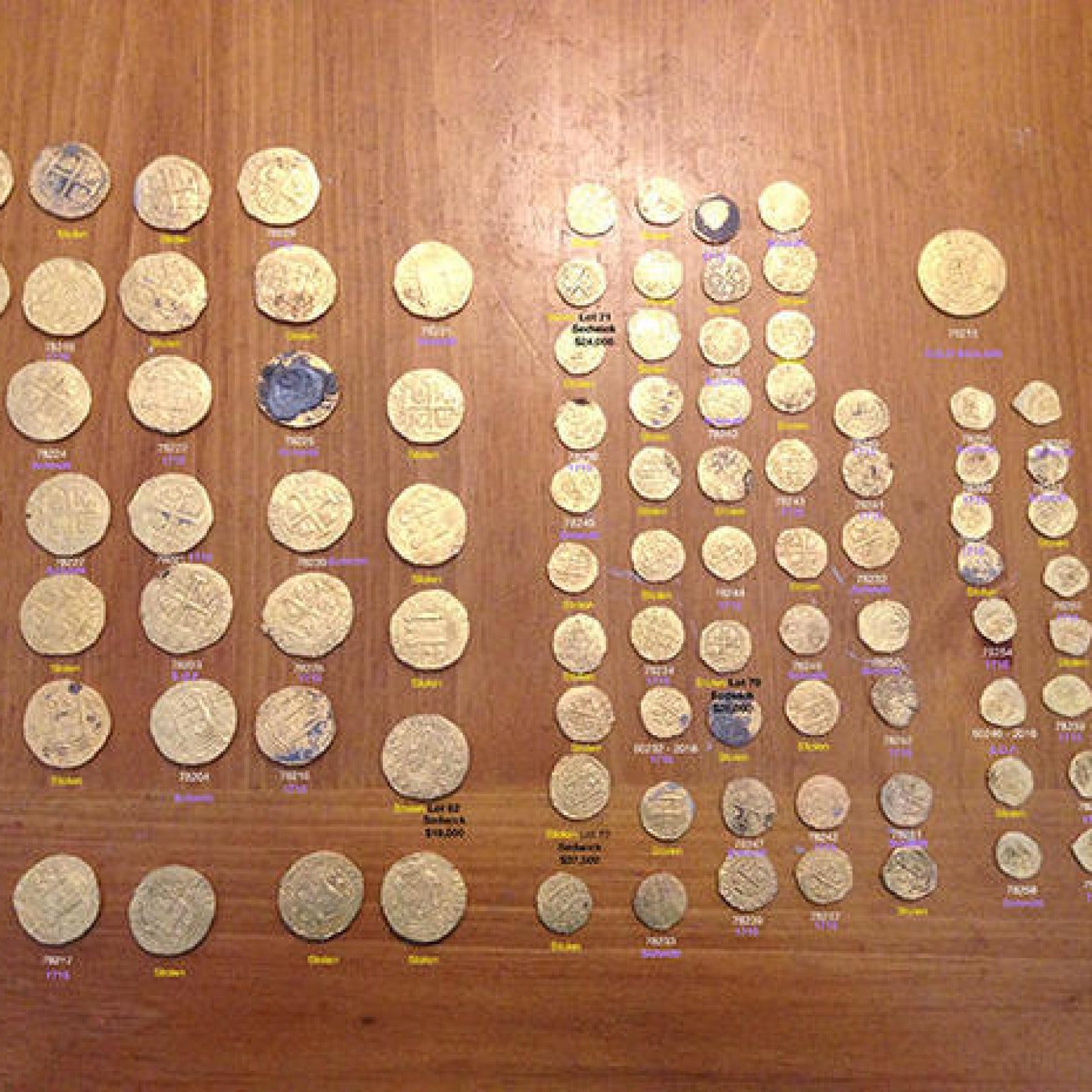
And in another twist where reality was stranger than fiction, Eric Schmitt actually took three of the stolen coins back out to sea and hid them on the ocean floor so that new investors in his salvage company could have the pleasure of discovering sunken Spanish treasure for themselves.
3. Jewelry Heists Often Start With a Shopping List
Yasmani, a jeweller in Vice City’s Little Cuba, has taken a fancy to an amethyst necklace and entrusts Jason and Lucia to get it for him. Yasmani’s desires continue and grow ever more specific, with our hapless pair entrusted to procure them each time.
Anything else they fancy smashing out of the display cases is their business.
The shopping list is a detail Rockstar gets right. In a report on organised retail theft, the US Congressional Research Service describes how fences give thieves shopping lists specifying what they want and how much they’ll pay for it. Yasmani is a particularly helpful sort of fence in that he’s also gone to the trouble of finding out which shop has the necklace.
Miami had a jeweller with rather broader tastes. In 2013, Florida investigators accused Nancy Aguilar, owner of a pawn shop called Treasure Chest Jewelers, of organising a burglary crew with her husband and her brother. Their targets were private homes in Miami and Miami Beach.
According to investigators, the burglars drove expensive cars into wealthy neighbourhoods, allowing them to go unnoticed. They committed over 30 burglaries before being caught.
The family’s pawn shop gave the crew somewhere to sell whatever jewellerythey stole. Investigators estimated that Treasure Chest had made at least $2.1 million selling stolen pieces to be melted down.
This is unlikely to have included an amethyst necklace, however, as the precious stone’s silica breaks down at around 1,710°C, as opposed to 1,064.18°C for pure gold.
4. Parrots Are Snitches
One of the earliest missions in GTA VI sees Jason’s neighbour, Shirley, owner to a particularly irksome Yorkshire terrier named Arugula, ask him to pick up a bottle of rum. This should be one of the less eventful errands in GTA VI, except Jason hears an odd noise coming from the back of the liquor store.
It turns out the people at Three Sheets in Key Lento are also in the exotic bird business. A particularly chatty parrot then tells Jason exactly where he can find the cash.
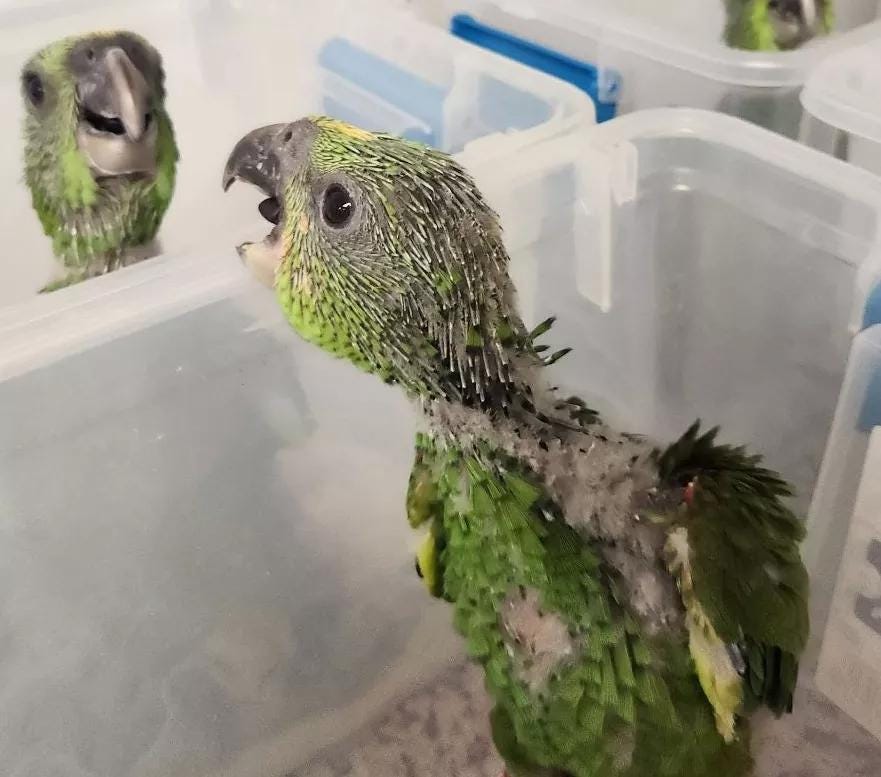
In March 2023, a customs officer at Miami International Airport heard a faint chirping coming from the hand luggage of a Taiwanese passenger who’d just arrived from Nicaragua. The man told investigators that a friend had paid him to fly from Taiwan to Managua and collect 29 eggs. He was on his way back when one of the eggs hatched during the Miami leg of the trip. Inside the bag, officers found a portable incubator, 28 eggs and the parrot that had just given the game away.
Two dozen chicks survived, including critically endangered yellow-naped Amazon parrots.
And again, reality outdoes fiction.
The parrot in GTA VI gave up a pile of cash to Jason Duval. The Miami bird managed to blow an international wildlife trafficking network.
5. Even Grand Theft Auto Comes With Paperwork
The game is called Grand Theft Auto, I should probably talk about stealing cars.
Lucia meets Moses Watkins, a mechanic who’ll buy a stolen car off her or, if she’s grown rather fond of it, register it in her name. The first registration is free, although Moses won’t accept a car fitted with a tracker.
Moses is wise.
In January 2024, police in Doral, just outside Miami, followed the signal from one stolen car to a garage and found a Lamborghini Urus, an Aston Martin DBS Superleggera and a Mercedes-Benz G550. Detectives arrested the garage owner, and their questions led them to a clerk at a Miami vehicle registration agency.
According to prosecutors, the clerk accepted cash or Cash App payments and charged $800 to $1,000 for each fraudulent title. Investigators identified 18 vehicles with altered identification numbers and put the value of the stolen cars at nearly $3.4 million.
This included white Jeep Gladiator that was written off as a total loss after being damaged in a fire. By the time the clerk finished the paperwork, prosecutors said, the Jeep had been rebuilt and was in perfect condition. That explained why another Jeep was driving around with its identity number.
I haven’t finished the game, but as far as I know, even Moses needs Lucia to bring him a working car.